
c/o Innovation Shades
Walk through enough recently renovated apartments on the Upper East Side and a pattern starts to emerge — not in the furniture or finishes, but in how the spaces operate. The rooms feel different. The light moves differently. And the small mechanical things you’d normally notice in a home — cords, pulls, switches — seem to have disappeared.
The reason is often motorization. In new condos rising throughout the UES, motorized shades and drapery are being specified at the development stage. In prewar coops on Park, Fifth, and the cross streets in between, they’re being retrofitted into apartments where the original cord systems were never going to age well in homes with eleven-foot ceilings.
The practical case is straightforward. UES prewar windows are large, and they were designed in an era when no one minded reaching, pulling, or balancing on a chair to adjust them. The same goes for the floor-to-ceiling glass that defines many newer buildings: beautiful at scale, awkward in operation. Motorization takes that friction out, which matters more in daily use than it sounds. A south-facing living room with five oversized windows is a different room when all five can be adjusted automatically as the sun moves.
The TriBeCa-based team at Innovation Shades has worked extensively throughout the Upper East Side, particularly in prewar co-ops and larger-scale residential renovations where motorization and architectural integration increasingly shape how rooms function day to day.
“There’s an instant elevation that happens with motorization — a room immediately feels more elegant, refined, and high-end,” says Julia Darmon-Abizker, co-founder and CEO of Innovation Shades.
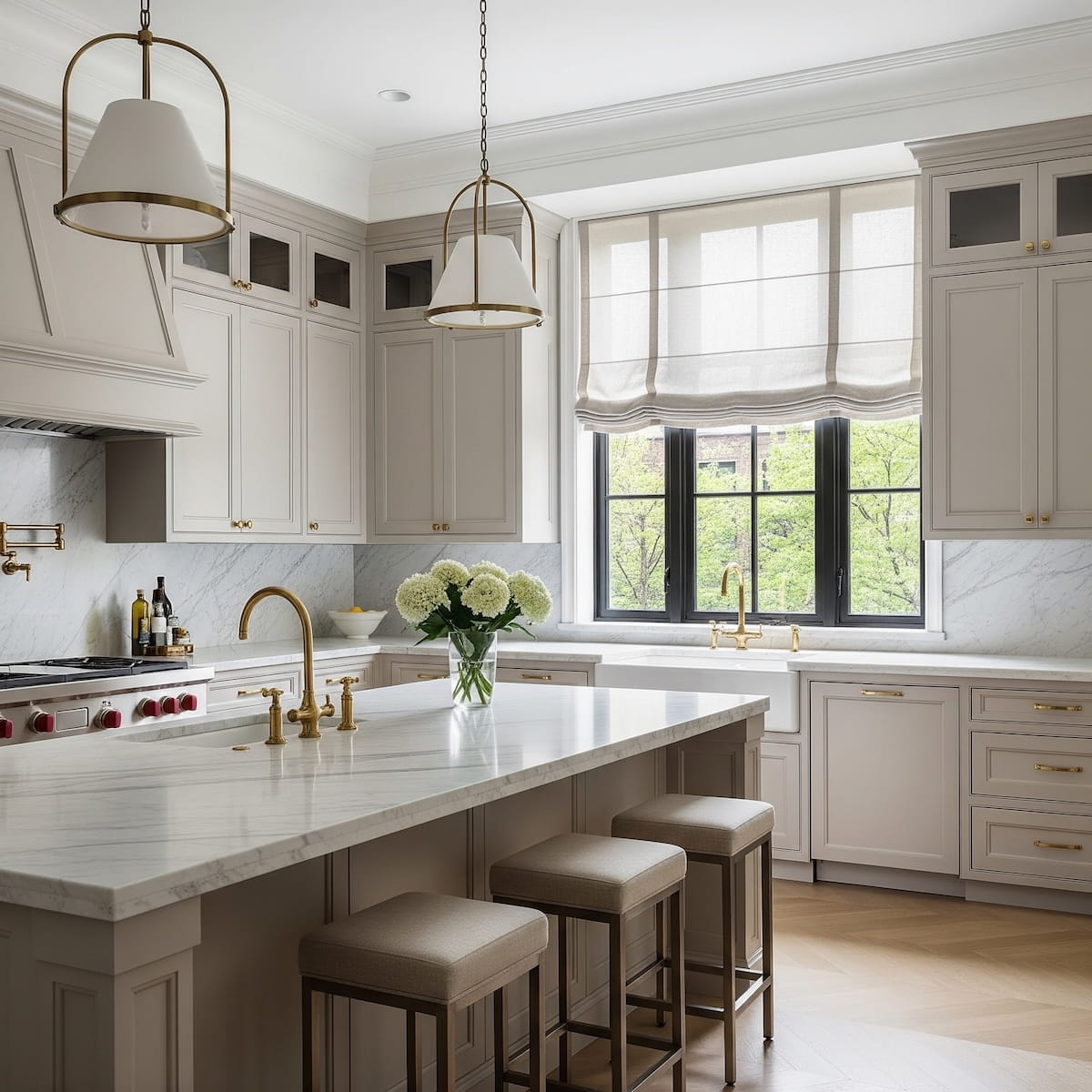
What this looks like in a finished home is less dramatic than it sounds. The mechanisms disappear into the architecture: hidden in pockets above the window, recessed into trim, tucked behind drapery returns. A homeowner in a Carnegie Hill prewar wakes up to bedroom shades that rise with the sunrise. A family on East 86th can program living-room sheers to lower in the late afternoon, when reflections off the building across the way would wash out a television screen. A townhouse in the upper 70s can have every shade across three or four floors close at sunset, or open for a dinner party — without anyone walking from room to room.
c/o Innovation Shades
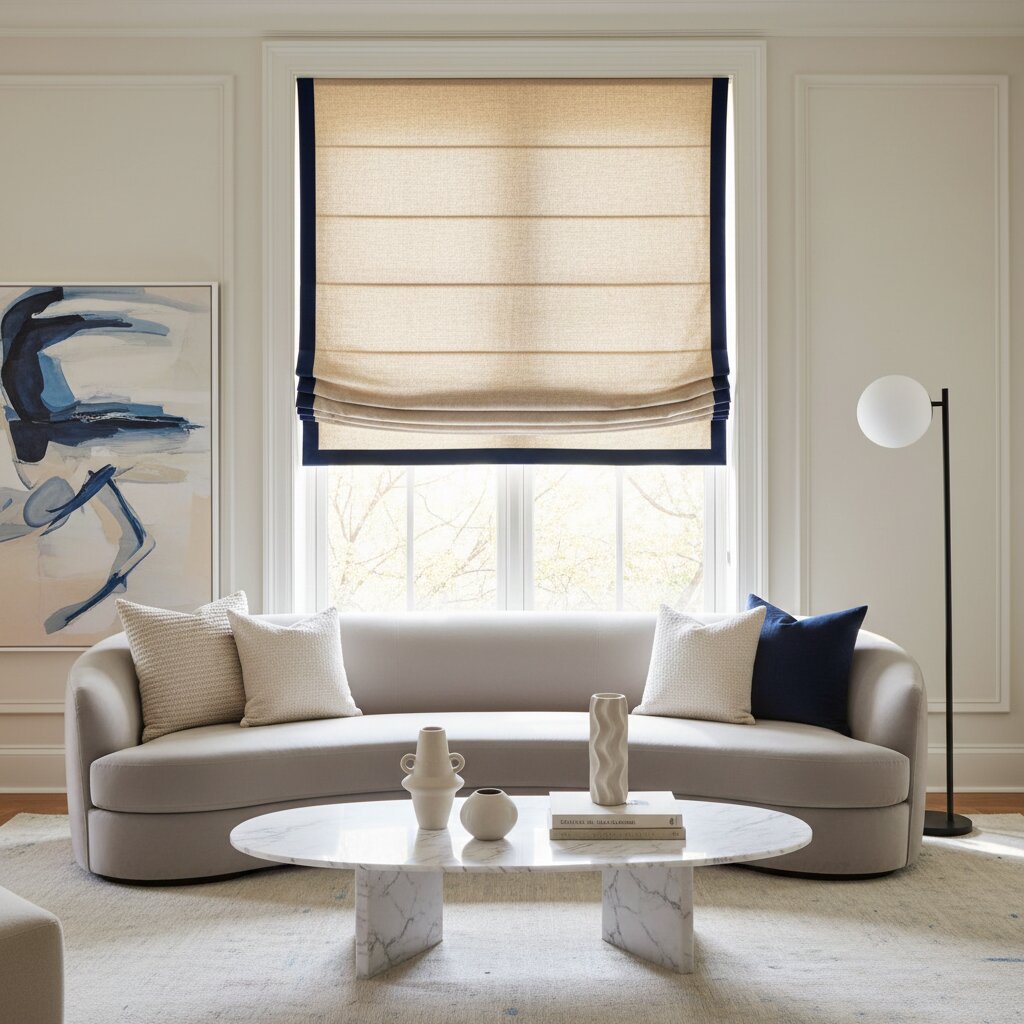
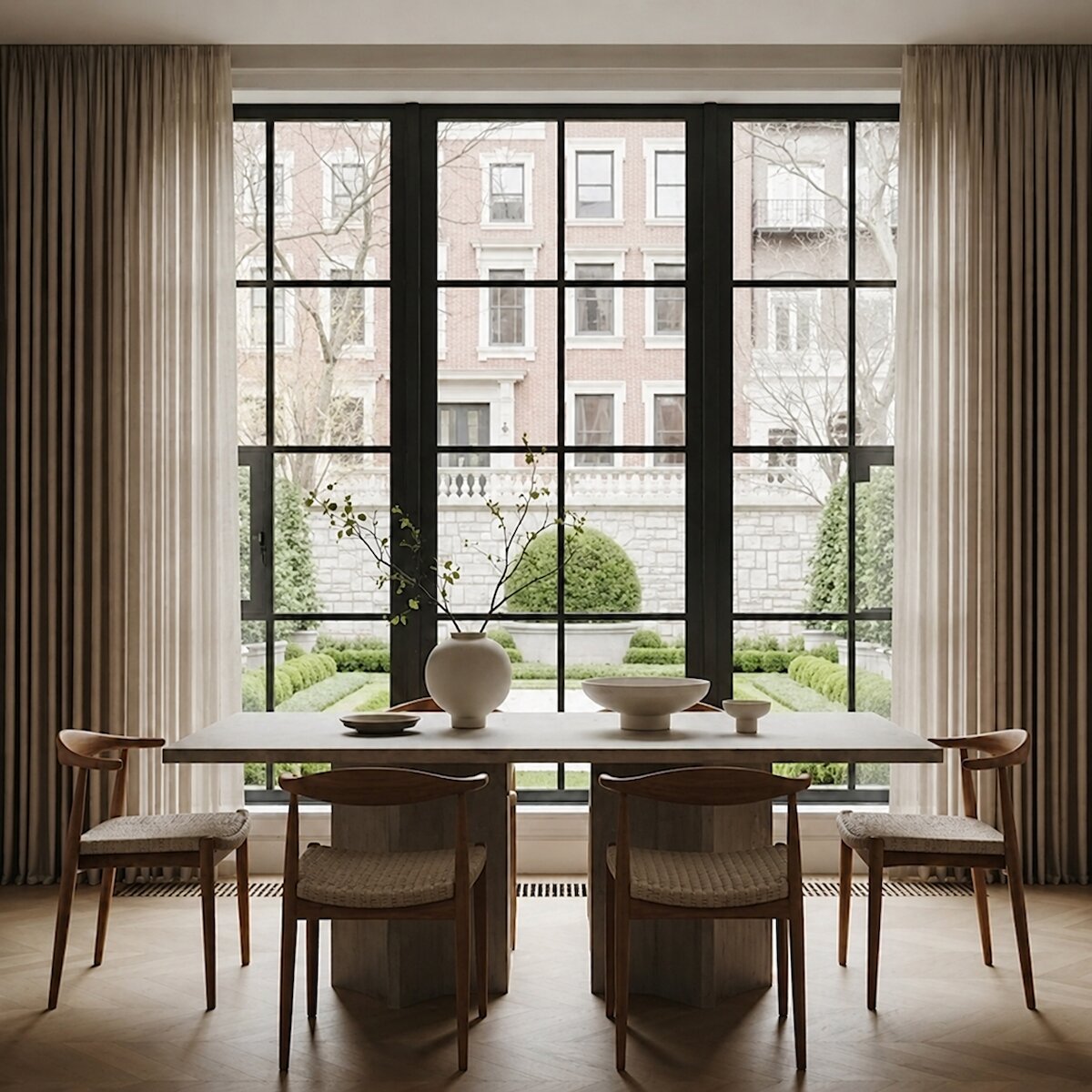
The aesthetic side hasn’t suffered for the technology, which surprises some homeowners new to the category. Innovation Shades carries the full Hunter Douglas line — Duette, Pirouette, Silhouette, and Heritance hardwood shutters — alongside custom drapery in tailored constructions like pinch pleat and rippled fold, all of which can be motorized without altering the visible fabric. A drapery panel in a Park Avenue dining room can be hand-finished in silk or wool, fall perfectly to the floor, and still glide on a hidden motorized track that responds to a single tap on a phone. The look is identical to traditional drapery. The behavior isn’t.
c/o Innovation Shades
For architects and designers working on high-end UES residences, the appeal is partly that motorization solves problems quietly. Multi-window rooms become coherent. Hard-to-reach skylights become useful. Children’s rooms become cordless without compromising light control. Smart-home integrations actually get used daily rather than being programmed once and forgotten. The technology is in service of the design, not the other way around.
Innovation Shades begins with the same in-home consultation it offers any client. An in-house designer walks through fabric, hardware, and motor selection at no additional charge, and the company coordinates with contractors, architects, and AV integrators when motorized systems are specified into a renovation. Free consultations can be booked through the Innovation Shades website or by calling (212) 343-9900.


