

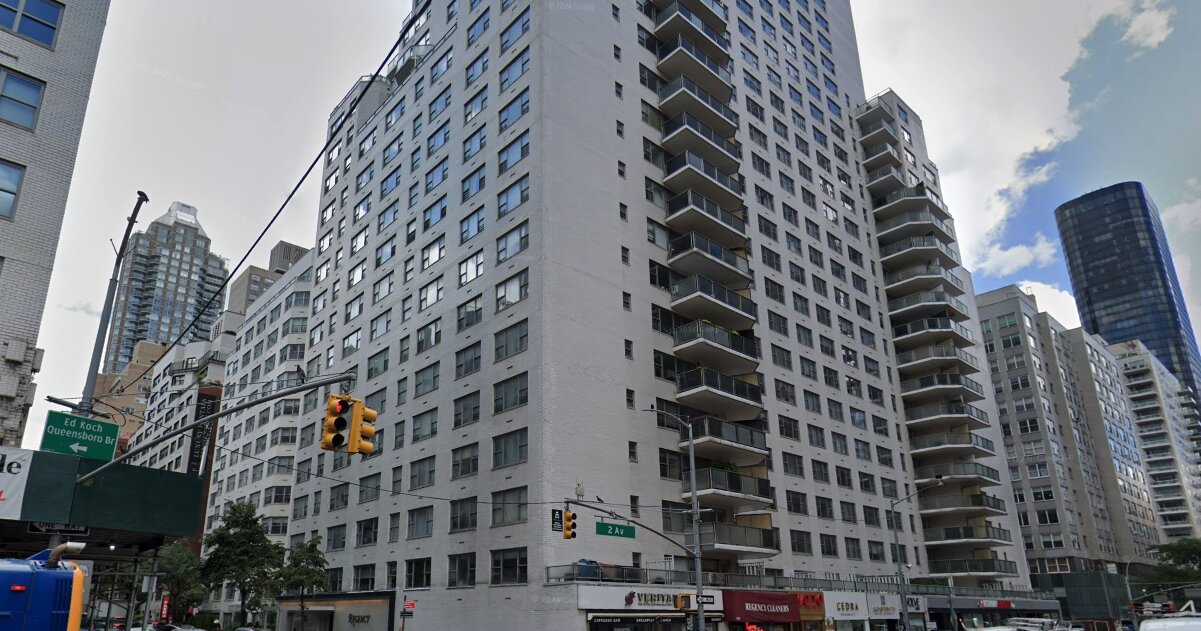
Google Maps
The most recent heat advisory pushed the heat index toward 100 degrees and sent the city to reopen its cooling centers. In one Upper East Side high-rise, tenants say they didn’t need to go outside to feel it.
Advertisement
Residents of Regency Towers, the white-brick rental tower at 245 East 63rd Street at Second Avenue – where recent rents, according to Streeteasy, have included a $3,900 studio, a $5,100 one-bedroom, and a $5,850 two-bedroom – say the building’s central air conditioning has been failing on and off since the start of the summer, which is an issue since the building doesn’t permit window units. The 1965 building holds roughly 530 apartments across 34 floors; how many units have gone without cooling at any given point isn’t clear.Management hasn’t disputed that there’s a problem. In a letter to residents dated August 6, Carlyle Property Management, writing as agent for Regency Towers LLC, apologized for ongoing issues with the air conditioning system and said that while the unit had been operating over the past several days, it wasn’t yet functioning at full capacity. The letter said a service contractor was actively working on the equipment and would continue making repairs and adjustments until the system was fully operational. It gave no date for when that would happen.
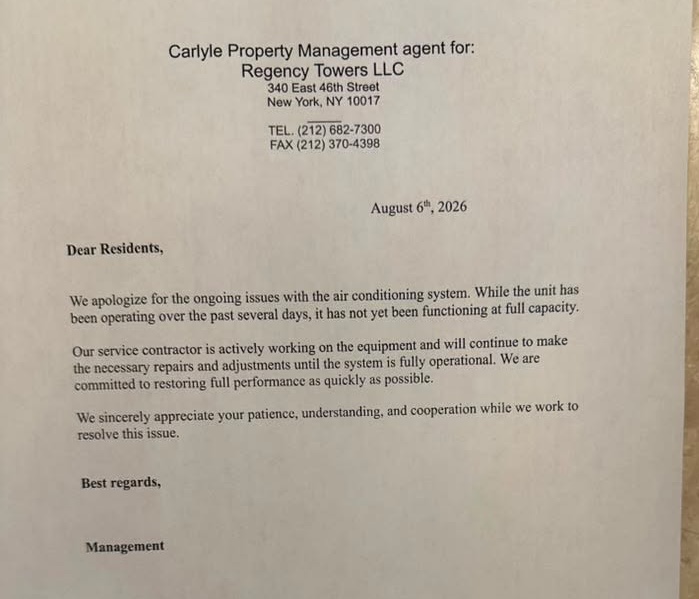
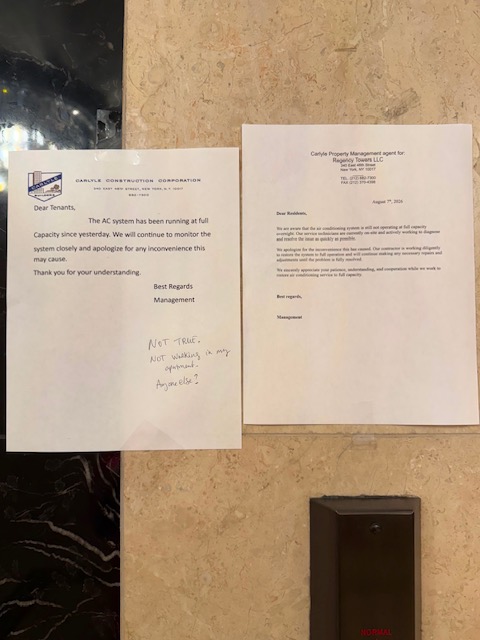
At least two more notices went up in the building. One, photographed in a hallway, is another letter from Carlyle Property Management on the same letterhead. The other, on Carlyle Construction Corporation letterhead and undated, told tenants the system had been running at full capacity since the previous day and that management would continue to monitor it closely.
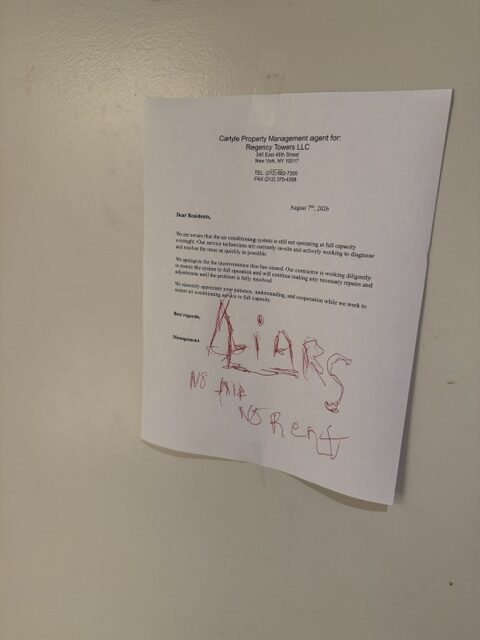
Residents have been answering the notices in marker. On the copy of the August 7 letter posted in a hallway, someone wrote “LIARS” in red across the bottom, and under it, “NO AIR” and “NO RENT.” Next to the notice claiming the system was back at full capacity, a tenant wrote that this was not true, that it wasn’t working in their apartment, and asked whether anyone else was in the same position.
Advertisement
Two tenants who contacted East Side Feed described the same pattern. One said the system has cut out repeatedly all season and that the problem goes back three years, with management repeatedly saying it’s being fixed. The other, who is pregnant, said the apartment sat at 89 degrees and humid with no working air conditioning and no timeline from the building for a fix.The complaints haven’t stayed private. In an email to the management company, residents wrote that the failures have gone unresolved for years and called the pattern of waiting until the hottest stretch of summer to make repairs unacceptable. They said the conditions have left apartments feeling unlivable, and argued that a building barring window units takes on the responsibility of keeping its own system running. The email asked for an explanation of why the problem hasn’t been permanently fixed, a timeline for restoring reliable cooling, a plan to keep it from happening again, and immediate action on the current conditions.
Because the building bars window units, tenants said their only option is a portable unit, which costs more to run and cools less. One tenant said the reason given is that window units are a safety risk and look bad from the street. As of this week, the picture inside the building is uneven. Some residents report cooling has returned and is working reasonably well. Others say theirs is intermittent, or weak enough that it doesn’t keep up with the heat. That patchiness is part of why the dispute has been hard to settle: management can say the system is running while a resident stands in an apartment that isn’t cooling, and both can be describing the same building accurately.
What tenants can do about it is narrower than most people expect. HPD enforces heat and hot water, not cooling, so a 311 complaint about a broken air conditioner generally won’t produce a violation the way a broken boiler would in January. The clearest recourse belongs to rent-stabilized tenants, who can ask the state’s Division of Housing and Community Renewal to cut their rent when a service the landlord had been providing stops. For a building-wide problem like a central system, that’s filed on DHCR form RA-84, and the reduction stays in place until the owner applies for and receives a restoration order. Market-rate tenants have a harder path, since their claim rests on what their lease promises rather than on the housing code.
That gap is closing, slowly. The City Council passed a cooling mandate that became law in January, adding air conditioning to the housing code alongside heat and hot water. Starting June 1, 2030, owners of tenant-occupied buildings will have to provide cooling capable of holding sleeping rooms at 78 degrees or lower when a tenant asks for it. A second provision reaches buildings like this one directly: where the owner controls the temperature, the owner has to run the system to maintain 78 degrees during a cooling season that runs June 15 through September 15. Under that standard, a summer like the one Regency Towers residents describe would be a housing code violation rather than a customer service dispute.
Advertisement
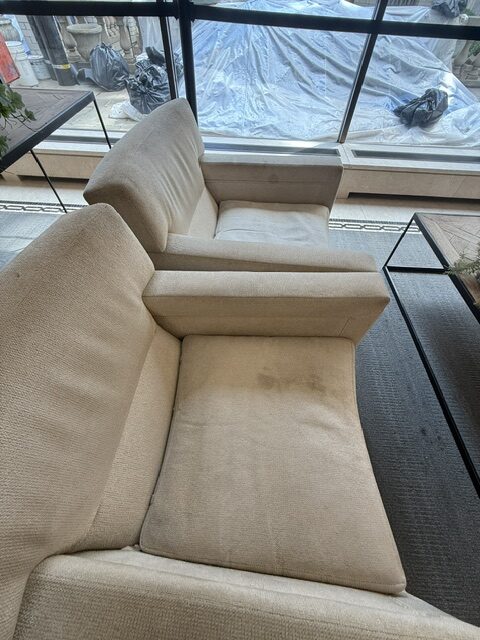
Photos from one displeased resident show conditions beyond the cooling system. One shows a bathtub filling with water the color of weak tea, cloudy and yellow-brown, deep enough to obscure the bottom of the tub. Several show a hallway carpet marked with a wide dark stain spreading from the baseboard across the pile. And another shows the building’s outdoor deck, where the pavers are lined with tarped equipment, stacked plywood, black construction bags, and an open planter bed of bare dirt, with the amenity space effectively unusable.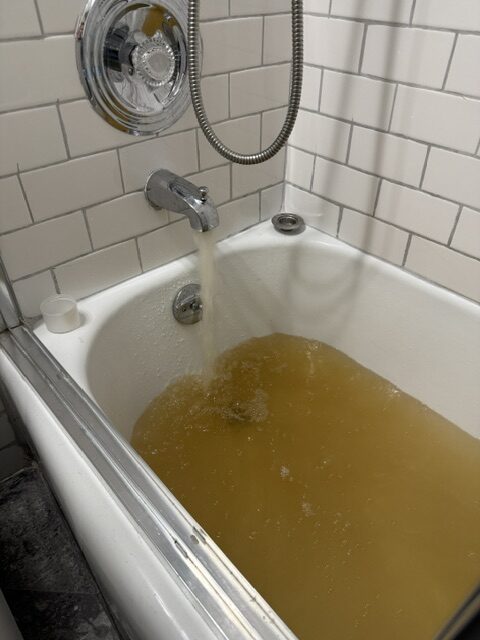
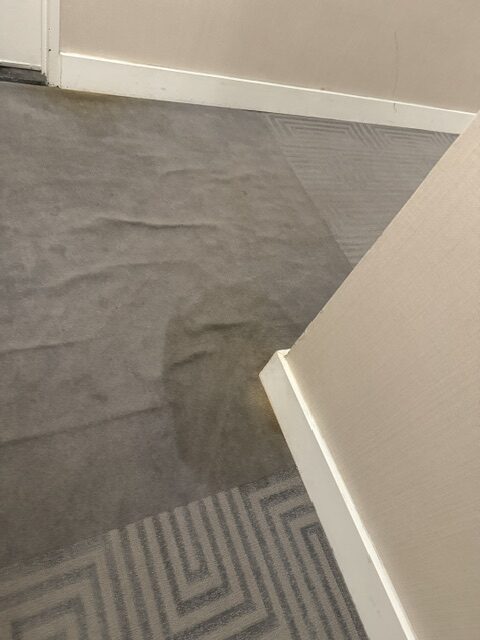
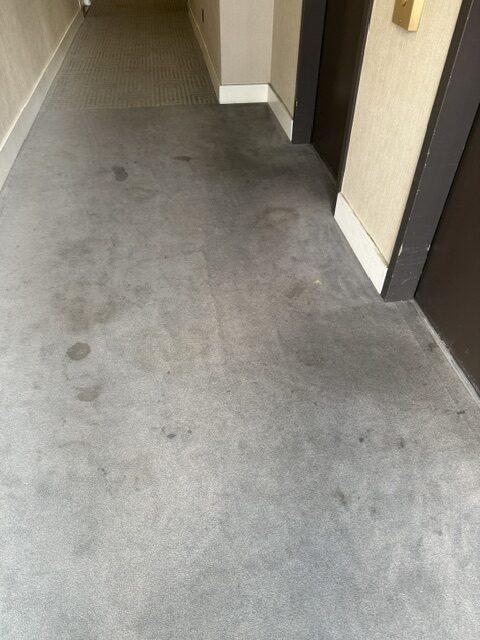
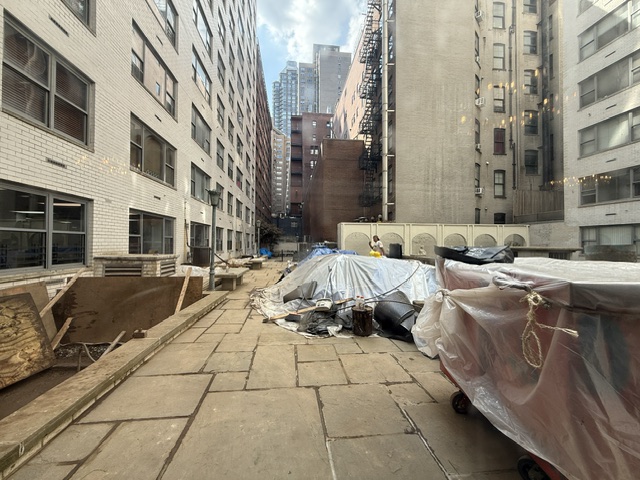
UPDATE (Aug. 13): Michael Francisco, the Director of Operations at Carlyle Property Management, responded to our inquiry with this statement:
“The air conditioning has been functioning the entire summer. On July 30th through August 6th, there were three separate incidents that had the absorber working at less than full capacity. Other than those times, there has not been an issue with the air conditioning in the building.”
Have a news tip? Send it to us here!


