
c/o Open Plans
A proposal that could dramatically reshape traffic patterns on the Upper East Side sparked a lively debate during a recent meeting of the Manhattan Community Board 8 Transportation Committee.
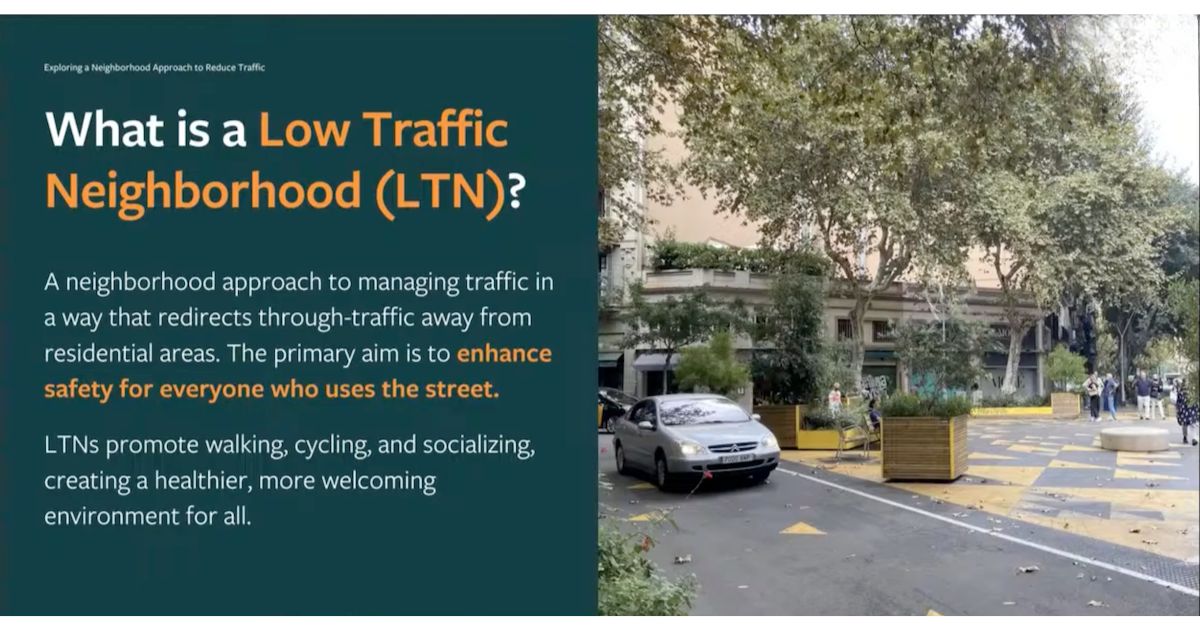
The discussion centered on the concept of “low-traffic neighborhoods,” a planning approach that aims to reduce cut-through driving on residential streets while keeping major avenues open to vehicles. The idea was presented by a representative from Open Plans, who described the strategy as a way to improve safety and quality of life in dense urban areas.
Advertisement
Under the concept, certain side streets could be redesigned to discourage through traffic, using tools such as traffic diverters, limited vehicle access, or other calming measures. Advocates say the goal is not to eliminate cars but to prioritize local traffic while encouraging drivers to remain on larger corridors designed to handle higher volumes.According to the presenter, studies suggest that a large share of traffic in the district is not generated by neighborhood residents.
“Over 50 percent of traffic in the district is cut-through traffic,” the representative said during the meeting.
The idea drew both interest and pushback from board members and attendees.
Some supporters said reducing through traffic on residential streets could improve pedestrian safety, reduce noise and pollution, and make neighborhoods more livable. Others, however, expressed concerns that shifting cars away from side streets could worsen congestion on already busy avenues.
One board member warned that such changes could have unintended consequences for drivers and the surrounding street network.
“As soon as the city starts to look like the suburbs, I’ll be leaving,” the member said, criticizing what they viewed as excessive traffic restrictions.
Others raised questions about how emergency vehicles, hospital access, and deliveries would function if certain streets were modified.
After the discussion, the committee voted to pass a resolution asking the New York City Department of Transportation to study the feasibility of low-traffic neighborhood strategies in the district.
The resolution does not implement any changes on its own, but it signals the board’s interest in exploring whether the approach could work on the Upper East Side.
The concept has been adopted in several cities around the world and has begun appearing in some New York transportation discussions in recent years. If the city were to pursue a pilot program locally, it would likely involve additional public meetings, design proposals, and further community feedback before any street changes occur.
For now, the conversation appears to be just beginning.
Have a news tip? Send it to us here!


