
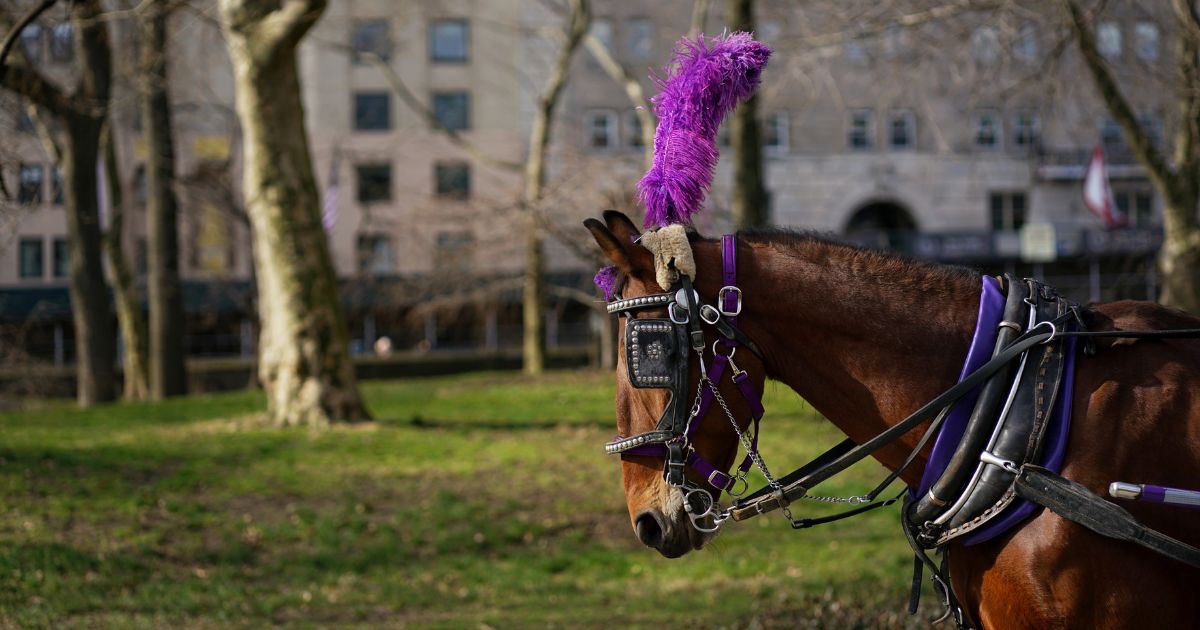
Central Park’s horse carriages now have an expiration date. The City Council voted Thursday to pass Romanch’s Law, ending a fight over the industry that outlasted several mayors and multiple failed bills.
Advertisement
The bill, Intro 943, immediately stops the city from issuing new carriage licenses and bans carriage operations entirely starting June 1, 2028, according to the City Council. Mayor Zohran Mamdani has said he’ll sign it.The law is named for Romanch Mahajan, an 18-year-old tourist from India who was killed on June 17 when he was thrown from a runaway carriage in Central Park. His death came weeks after a carriage horse collapsed and died in the park. Mahajan’s father testified in support of the bill over Zoom from India at the Council’s July hearing on the ban.
The Central Park Conservancy, which manages the park and pushed for the ban, applauded the vote. “Central Park was created in 1858 to provide a peaceful respite for the roughly 800,000 residents of a growing city,” Conservancy President and CEO Betsy Smith said in a statement. “Horses and buggies were part of everyday life for many New Yorkers, and the Park was a natural home for tranquil carriage rides.”
Smith said the park now sees some 40 million visits a year, a level of activity she called “fundamentally incompatible with the presence of horse carriages.” She added that Mahajan’s death was the ninth carriage-related incident in just over a year, “a number we could not ignore as the stewards and caretakers of Central Park.”
Smith thanked Council Speaker Julie Menin, saying she’d summoned a “powerful will to action” that no other Speaker had, and credited Mamdani’s team with working toward a smooth transition. She also said the Conservancy will keep pressing city leaders on e-vehicles, pedicabs, and other issues in an increasingly crowded park.
Menin, who announced the vote last week, called the carriages “a growing public safety liability” in today’s busy Central Park.
The industry counts roughly 160 horses, 68 carriages, and 208 licensed drivers, who are represented by Transport Workers Union Local 100. Under the law, the mayor has to establish a transition plan for those workers by April 2027, according to Gothamist. That program has to include referrals to city and state government jobs and to hospitality and tourism work, along with job training and career fairs. The bill doesn’t require the city to compensate carriage owners, though. It only says the city should “consider” compensation, according to amNewYork.
The horses are covered too. Owners have to notify the Mayor’s Office of Animal Welfare before getting rid of a horse, and the bill forbids selling or transferring them for slaughter or to another horse-drawn carriage business, according to CNN.
Advertisement
The union isn’t going quietly. In a letter sent Wednesday to city Corporation Counsel Steve Banks, TWU attorney Arthur Schwartz wrote that the union would “seek a TRO the minute the ink dries,” referring to a temporary restraining order that would put the law on hold. Schwartz argues the city is taking drivers’ and owners’ property, including their medallions, licenses, horses, and carriages, without paying for it, which the Constitution doesn’t allow. “It offers nothing concrete for blue-collar drivers and carriage owners who will be financially crushed,” TWU International President John Samuelsen said, according to amNewYork. “It’s theft.” A Law Department spokesperson told the outlet the city is confident the law will hold up and is prepared to defend it.At least one former supporter peeled off before the vote. Queens Council Member Joann Ariola, previously a co-sponsor, said she could “no longer support a carriage horse ban that fails to give the same level of consideration to the hardworking carriage drivers whose livelihoods are at stake,” according to ABC7.
The bill first surfaced in 2022 as Ryder’s Law, named for a carriage horse that collapsed on a Hell’s Kitchen street that year. A previous version was voted down in the Council’s Health Committee last November.
“Dozens of cities around the world, from London to Las Vegas, have moved beyond horse-drawn carriages,” Smith said. “Today, New York City finally joins them.”
Have a news tip? Send it to us here!


