
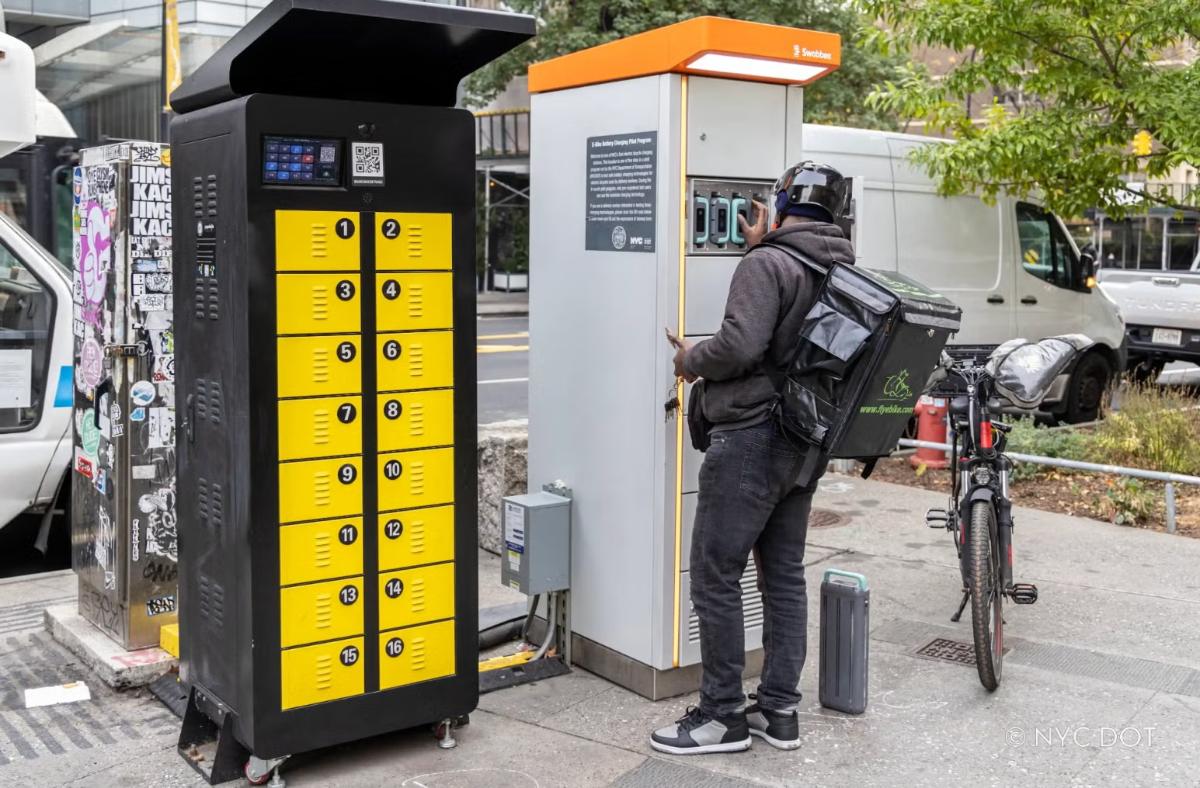
c/o Department of Transportation
Free Upper East Side News, Delivered To Your Inbox
The city is floating a plan that could bring a new piece of street-level infrastructure to the Upper East Side — and it’s asking residents what they think before anything gets built.
Advertisement
The Department of Transportation last week released a preliminary map of around 50 citywide locations where it may install e-bike battery swapping cabinets, part of a broader push to get lithium-ion batteries out of apartments and into purpose-built outdoor units. Two of the proposed sites sit on the Upper East Side.The cabinets function as shared charging hubs: riders can swap a depleted battery for a freshly charged one, or plug in and wait. The program is aimed squarely at the city’s delivery workforce, which has long relied on e-bikes and whose charging habits — often involving cheap aftermarket batteries kept indoors — have been tied to a string of fatal residential fires in recent years.
Before the project moves into its design phase, the DOT is gathering public input on the preliminary sites through a dedicated feedback portal. The agency plans to narrow the list down to roughly 25 finalists, with the window for comments closing on July 31.
Here are the proposed Upper East Side locations:
- Second Avenue and East 79th Street
- First Avenue and East 73rd Street
Every cabinet is slated to be built to FDNY specifications, with fire suppression systems, battery health tracking, and tamper- and weather-resistant construction. The batteries themselves must be certified to the top applicable UL standards. In a related move, the FDNY is extending its filing window for grandfathered outdoor cabinet installations under the Letters of No Objection program into September 2026, which should allow more certified testing labs to get up to speed on UL 1487 certification.
Operation of the cabinets will be handled by one or more private vendors chosen through a forthcoming RFP, and riders will access them via paid membership. The electrical work required to connect each site is being underwritten by the New York State Energy Research and Development Authority’s Clean Mobility Program.
Advertisement
The concept itself isn’t untested. A DOT pilot run in 2024 over a six-month stretch found that the cabinets held up well in public conditions, saw steady use, and allowed delivery workers to extend the number of trips they could complete on a single shift. Assuming everything stays on schedule, the finalized cabinets are expected to come online in 2028.Additional details about the rollout can be found on the DOT’s project page.
Have a news tip? Send it to us here!


