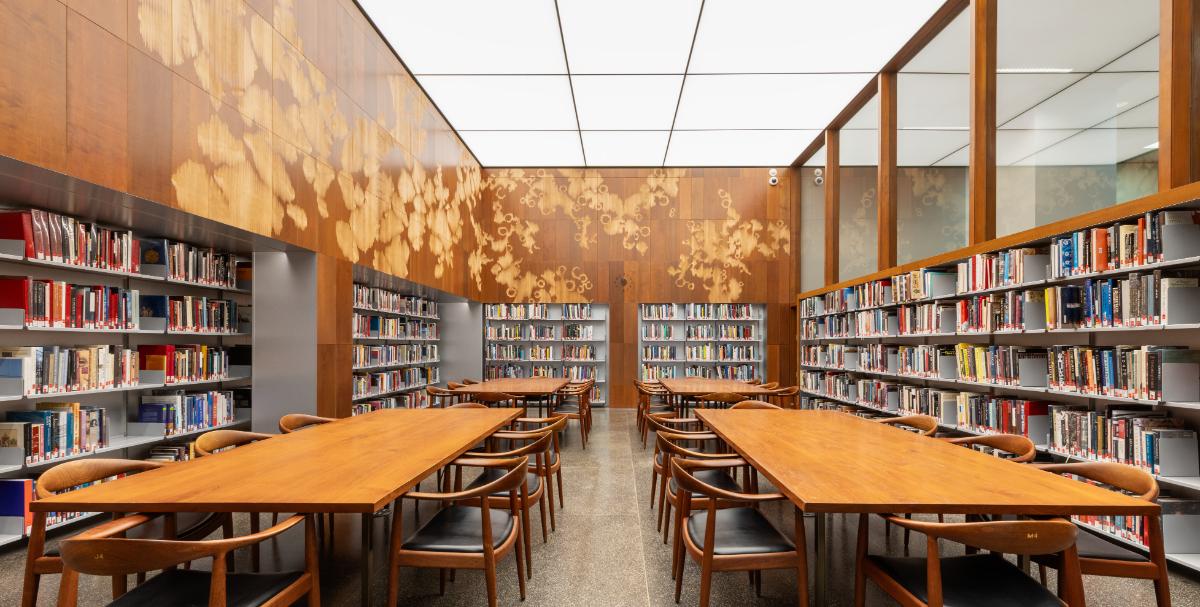
Photo by Hyla Skopitz, courtesy of The Met
The Metropolitan Museum of Art has quietly reopened one of the few corners of its encyclopedic galleries where anyone can pull a book off the shelf, sit down, and stay a while. The redesign is handsome and built to do far more than hold books — but the most remarkable part of it honors a piece of the building most visitors have walked past for 70 years without ever stopping to look.
Advertisement
On June 16, The Met reopened the redesigned Nolen Study Room inside its Thomas J. Watson Library, the Museum’s research library on the first floor. The room, which is accessible to the public, now holds roughly 5,000 books on open, browsable shelves chosen to reflect the scope of The Met’s collection. It replaces the former Periodical Room and was built to flex: beyond a reading room, it can host classes, seminars, and public programs. A redesigned circulation desk rounds out the $3 million, 1,000-square-foot project, which The Met built with New York– and Los Angeles–based firm Young & Ayata.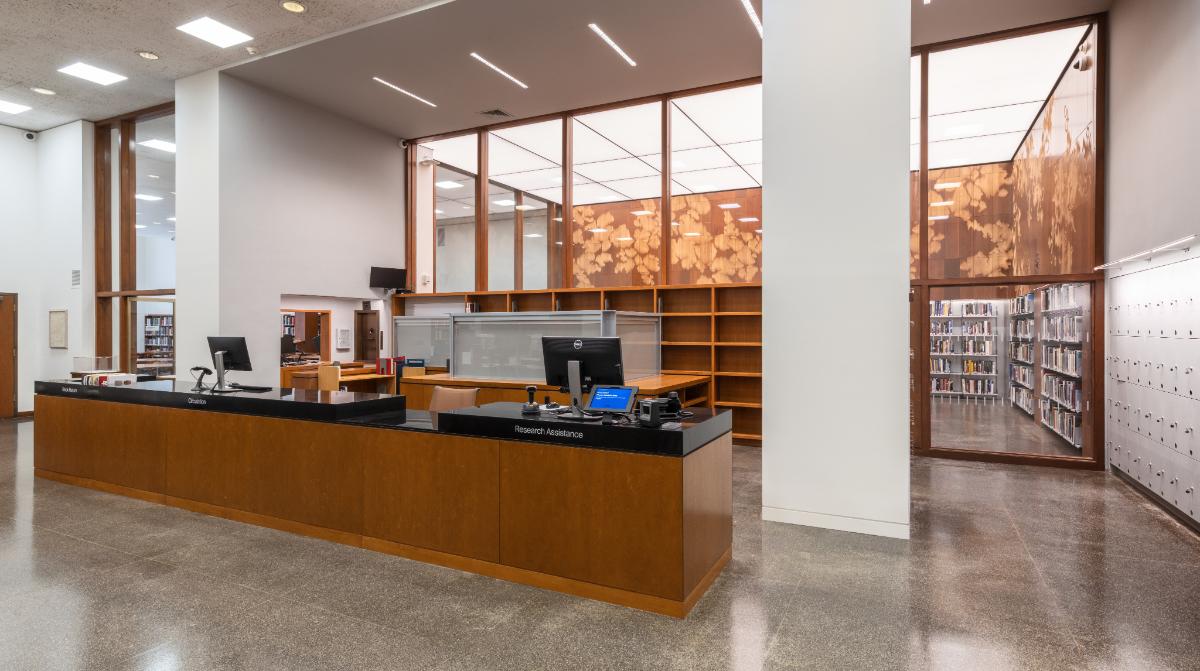
Photo by Hyla Skopitz, courtesy of The Met
“We are delighted to reopen our beloved Watson Library and newly redesigned Nolen Study room,” said Max Hollein, The Met’s Marina Kellen French Director and CEO, adding that the space was reimagined to better welcome researchers from New York and around the world.
Which brings us back to those walls. Watson Library’s modernist home opened in 1965, and the room’s original wood shelving had quietly accumulated about 70 years of patina. Rather than tear it out, Young & Ayata centered the design on reuse — pulling the old wood panels that once formed the shelves and reinstalling them as wall paneling. The panels were sent to Situ Fabrication in Brooklyn, then milled with an intricate pattern inspired by paper marbling, the centuries-old technique of swirling color across a liquid surface and dipping paper into it.
Advertisement
It took more than 300 pattern studies to settle on the final design, milled no deeper than an eighth of an inch and bookmatched so the patterns mirror and blur at the center of each wall — a nod to the paneling at the Four Seasons in the Seagram Building. And the reuse wasn’t only aesthetic: according to an embodied carbon study by CO Adaptive, reusing the existing wood took roughly one-eighth the embodied energy of building new. Young & Ayata cut aluminum bookshelves into the paneled walls and added a stretched-fabric ceiling, letting the old wood do the talking.The architects have called the result a kind of mid-century modernist “period room” — one that honors its legacy while abstracting it into something new. The Nolen Study Room is now open to the public inside Watson Library on the first floor of The Met.
Have a news tip? Send it to us here!